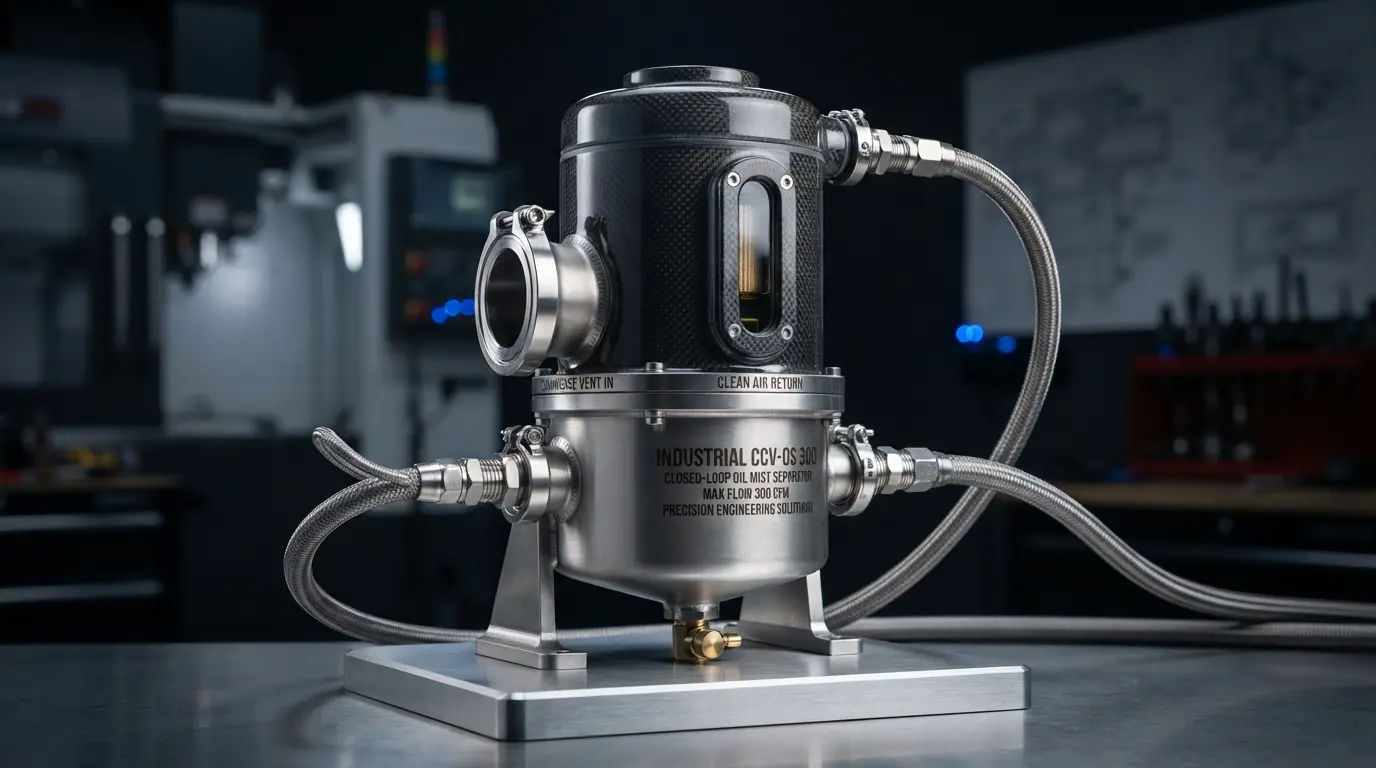
Every reciprocating engine experiences a small amount of combustion gas escaping past the piston rings into the crankcase—commonly known as blow-by. Left unmanaged, these pressurized gases would quickly blow out your front and rear main oil seals.
Modern gas power plants rely on closed-loop crankcase ventilation systems and high-efficiency oil mist separators to filter these gases before routing them back into the turbocharger intake.
Why Mist Separators Matter
If your crankcase breather or air-oil separator becomes saturated or blocked, internal crankcase pressure builds up rapidly. This pressure restricts oil from draining down freely from the cylinder head, resulting in oil pooling, increased turbocharger seal weeping, and messy engine bay contamination.
Furthermore, uncollected oil droplets entering the intake stream coat your intercooler fins and alter your air-fuel ratio calculations.
Best Practices for Crankcase Maintenance
- Replace Filter Elements on Schedule: Do not wait for a complete blockage. Change coalescing filter elements according to operating hour milestones.
- Check Vacuum Regulators: Ensure your crankcase pressure regulating valve maintains a slight negative pressure inside the block to optimize seal longevity.
Reliable Filtration Spares in Stock
We supply high-performance crankcase ventilation filters and replacement breather elements designed to keep your engine room clean and compliant. Reach out to our procurement desk via WhatsApp today.