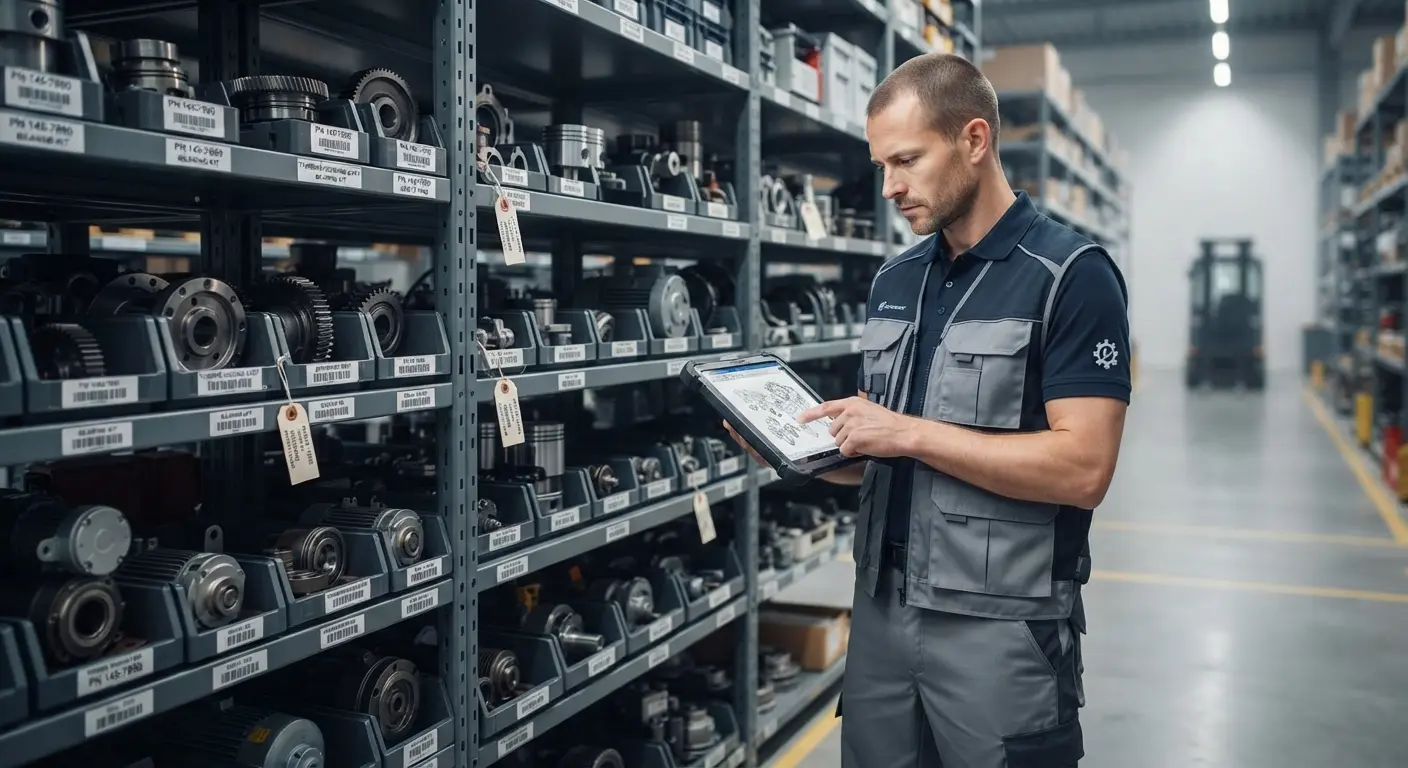
In industrial power generation, precision is everything. When a gas engine experiences a fault or requires routine maintenance, ordering the correct component is the single most critical step in minimizing downtime. Yet, one of the most common bottlenecks we encounter when speaking with plant managers across South Asia and the Middle East is a simple case of misidentification: ordering parts based on general descriptions rather than exact model and series specifications.
At Mega Solutions UAE, we supply high-demand OEM components for heavy-duty gas engines. To ensure your procurement cycle runs without friction, understanding how to accurately identify your generator model and series is essential.
Step 1: Locate the Engine Nameplate
Every industrial gas engine leaves the factory with a permanent identification plate (nameplate) securely riveted to the engine block or crankcase housing.
- Where to look: Typically, the nameplate is positioned near the control panel, on the main crankcase door, or adjacent to the flywheel housing.
- What it contains: The nameplate is your primary source of truth. It displays the exact serial number, engine type/series (such as Type 3 or Type 6 architecture), year of manufacture, and specific performance ratings.
Never rely solely on general enclosure labels or external skid branding, as ancillary packaging can change while core engine blocks remain specific to their production generation.
Step 2: Decode the Series and Configuration
Understanding the difference between generation architectures is vital—especially when dealing with high-performance units like the Jenbacher 320 or 620 series.
- Series 3 vs. Series 4/6: Component dimensions, tolerances, and thermal thresholds vary significantly across generations. A gasket or valve designed for an earlier iteration will frequently fail or mismatch when applied to a later specification upgrade.
- The Serial Number Sequence: The serial number is more than a random string of digits; it encodes the specific material metallurgy and factory configuration of your block. When requesting quotes or sourcing critical wear parts from global stockists, providing this exact serial number bypasses guesswork.
Step 3: Documenting Sub-Assemblies and Component Codes
Beyond the main engine nameplate, major sub-assemblies often carry their own sub-component tags:
- Turbochargers: Often supplied by secondary manufacturers (such as ABB or Napier), these carry separate identification plates crucial for procuring overhaul kits.
- Ignition Systems & Actuators: Electronic control modules and throttle bodies have specific firmware and hardware revisions.
Why Accurate Identification Protects Your Bottom Line
Ordering industrial spare parts based on vague assumptions leads to prolonged downtime, costly return logistics, and potential operational risks. By establishing a rigorous internal protocol where technicians log the exact serial number and nameplate data before a maintenance window opens, you ensure that your global supply chain partner can match and dispatch the correct physical stock instantly.
When you reach out to our team at Mega Solutions UAE with a precise model code and serial number, our Sharjah-based warehouse can immediately verify physical stock availability, eliminating costly delays and keeping your plant running at peak efficiency.
Note: Mega Solutions UAE is an independent trader. We are not an authorized distributor of, or affiliated with, the INNIO Jenbacher brand. All trademarks are the property of their respective owners.