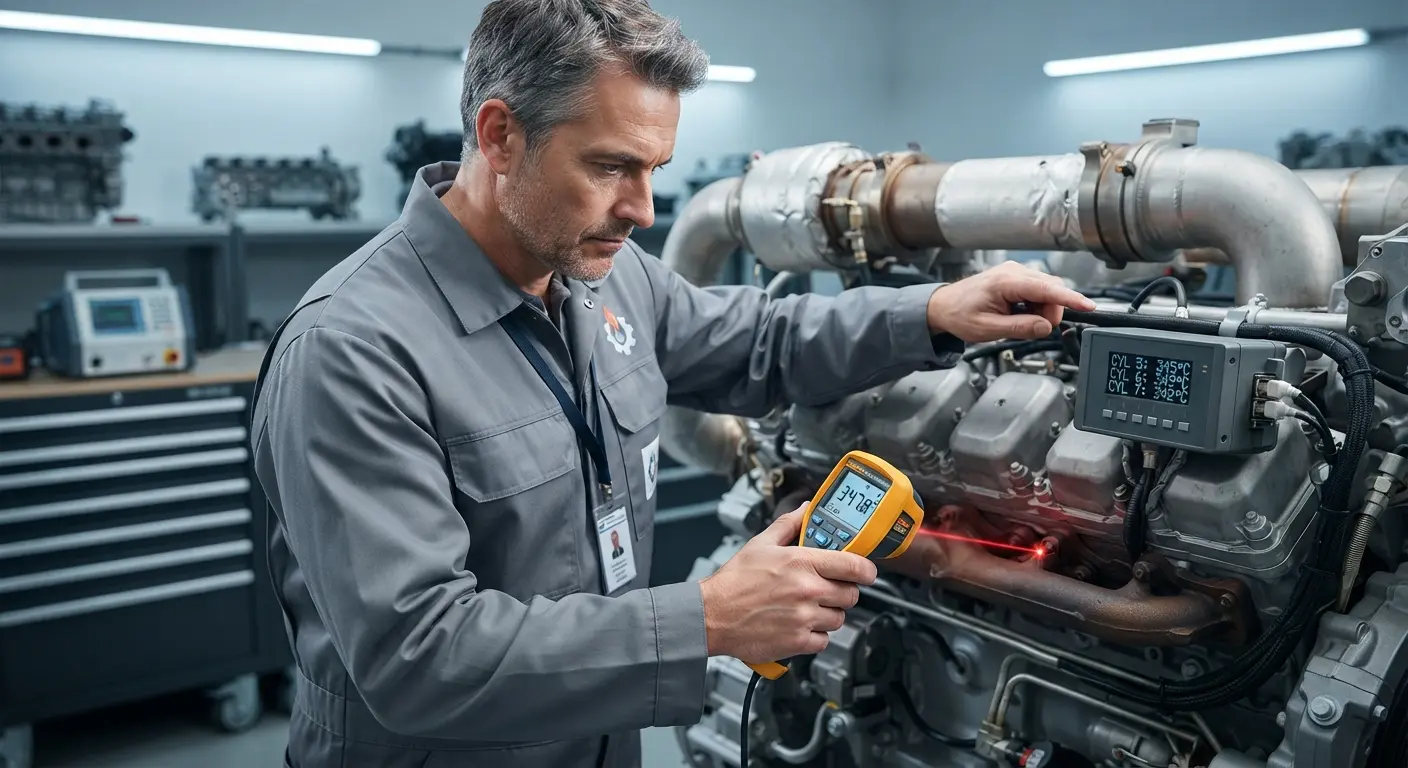
In a multi-cylinder industrial gas engine, achieving balanced combustion across every single cylinder is vital for mechanical longevity. Monitoring Exhaust Gas Temperatures (EGT) provides plant operators with real-time insight into internal combustion dynamics. When one cylinder runs significantly hotter or cooler than the rest, it signals an underlying operational imbalance that requires immediate investigation.
At Mega Solutions UAE, we work with technical teams troubleshooting combustion efficiency. Here is how to approach EGT imbalances systematically.
1. What Causes EGT Imbalances?
An abnormal spike or drop in a specific cylinder’s exhaust temperature typically points to one of a few critical issues:
- Fuel Delivery Discrepancies: A partially blocked gas admission valve or faulty port injector delivering inconsistent fuel volumes to a single cylinder.
- Ignition Misfires: Weak spark energy or a degraded ignition coil causing incomplete combustion, which lowers that cylinder’s EGT while sending unburnt fuel into the exhaust manifold.
- Valvetrain Wear: Leaking exhaust valves or incorrect valve lash clearances altering chamber compression and thermal release.
2. Diagnostic and Corrective Action Steps
- Review Thermocouple Accuracy: Ensure the EGT sensor itself isn’t fouled or failing before tearing down mechanical parts.
- Inspect Ignition and Fuel Rails: Check spark plugs and gas metering valves on the affected cylinder. Replacing worn ignition components often restores thermal equilibrium instantly.
Note: Mega Solutions UAE is an independent trader. We are not an authorized distributor of, or affiliated with, the INNIO Jenbacher brand. All trademarks are the property of their respective owners.