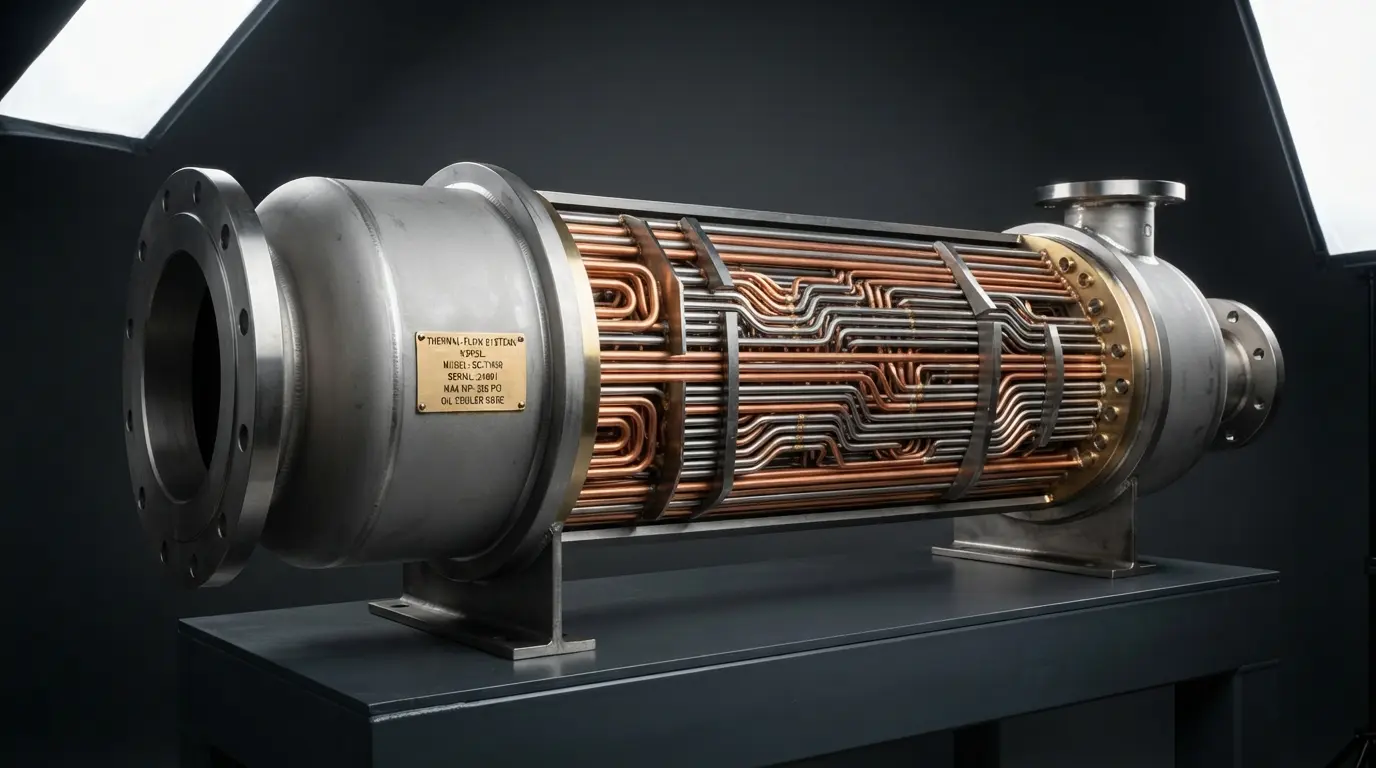
Lubricating oil is the lifeblood of any heavy-duty industrial gas engine. It cushions moving parts, sweeps away combustion contaminants, and carries away critical internal heat. However, oil can only perform these duties if its temperature stays within a strict operating window.
When your engine oil cooler becomes fouled with scale or internal sludge, lubricant temperatures skyrocket, oil film thickness collapses, and your main bearings face immediate risk of metal-to-metal contact.
The Dangers of High Oil Temperatures
As oil temperature rises above manufacturer thresholds, its viscosity drops dramatically. A 10-degree Celsius rise past normal limits can cut oil film strength in half, transforming a protective hydrodynamic barrier into a thin film easily breached under peak cylinder loads.
- Internal Core Fouling: Raw water-side scaling or oil-side carbon varnish restricts thermal transfer efficiency.
- Pressure Drop Spikes: A clogged cooler core creates a restrictive pressure drop, starving upper valvetrain galleries of vital lubricant flow.
Maintaining Optimal Cooling Performance
- Periodic Chemical Flushing: Schedule routine ultrasonic cleaning or chemical descaling of your shell-and-tube or plate-type oil coolers during major maintenance intervals.
- Monitor Delta-T: Keep track of the temperature differential across the oil cooler inlet and outlet to detect internal clogging before it triggers high-temp engine alarms.
Heavy-Duty Cooling Solutions
Don’t let high oil temperatures shorten your overhaul intervals. Explore our inventory of high-efficiency replacement oil cooler cores and gaskets. Connect with our team on WhatsApp today to check availability.