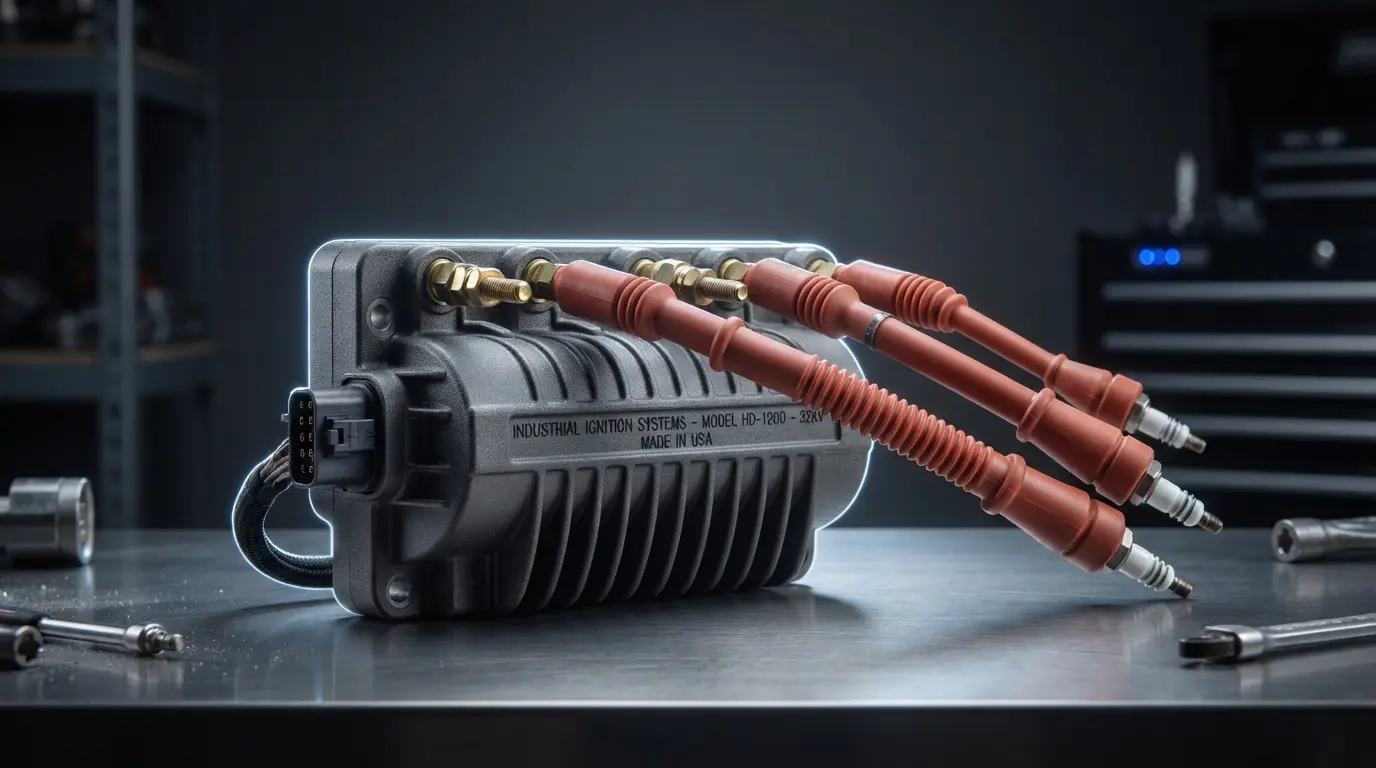
When an industrial gas engine suffers from intermittent power loss or difficult cylinder lighting, technicians often swap out the spark plugs first. But what happens when brand-new plugs don’t fix the misfire? More often than not, the root cause lies deeper in the electrical circuit: degraded ignition coils.
In continuous-duty co-generation plants, ignition coils are subjected to intense thermal cycling and high electromagnetic stress. Over time, internal epoxy insulation breaks down, leading to micro-cracks that allow high-voltage current to arc directly to the grounded cylinder head instead of jumping the plug gap.
Recognizing Coil Breakdown and Secondary Leakage
- Weak Spark Energy: A failing coil cannot deliver the secondary voltage required to fire under high-load cylinder pressures, resulting in a soft or delayed spark.
- Insulation Tracking: Look for faint carbon tracking lines or white powdery corrosion along the secondary output tower of the coil block.
- Harness Degradation: High engine bay temperatures harden rubber boots, allowing moisture and oil vapor to creep into the primary connector pins.
Best Practices for Ignition Reliability
- Replace Boots with Every Coil Swap: Always install fresh silicone spark plug extension boots whenever you replace a coil. Reusing old, heat-brittle boots virtually guarantees secondary voltage leakage.
- Grounding Integrity Check: Ensure your ignition module grounding straps are clean, tight, and free of paint or oxidation to prevent high-frequency electrical noise from corrupting your ECU timing signals.
Secure Reliable Ignition Components
Keep your combustion chamber firing cleanly across every cycle. We maintain stock of heavy-duty industrial ignition coils and harnesses designed for demanding gas engines. Reach out to our technical team via WhatsApp for prompt fulfillment.