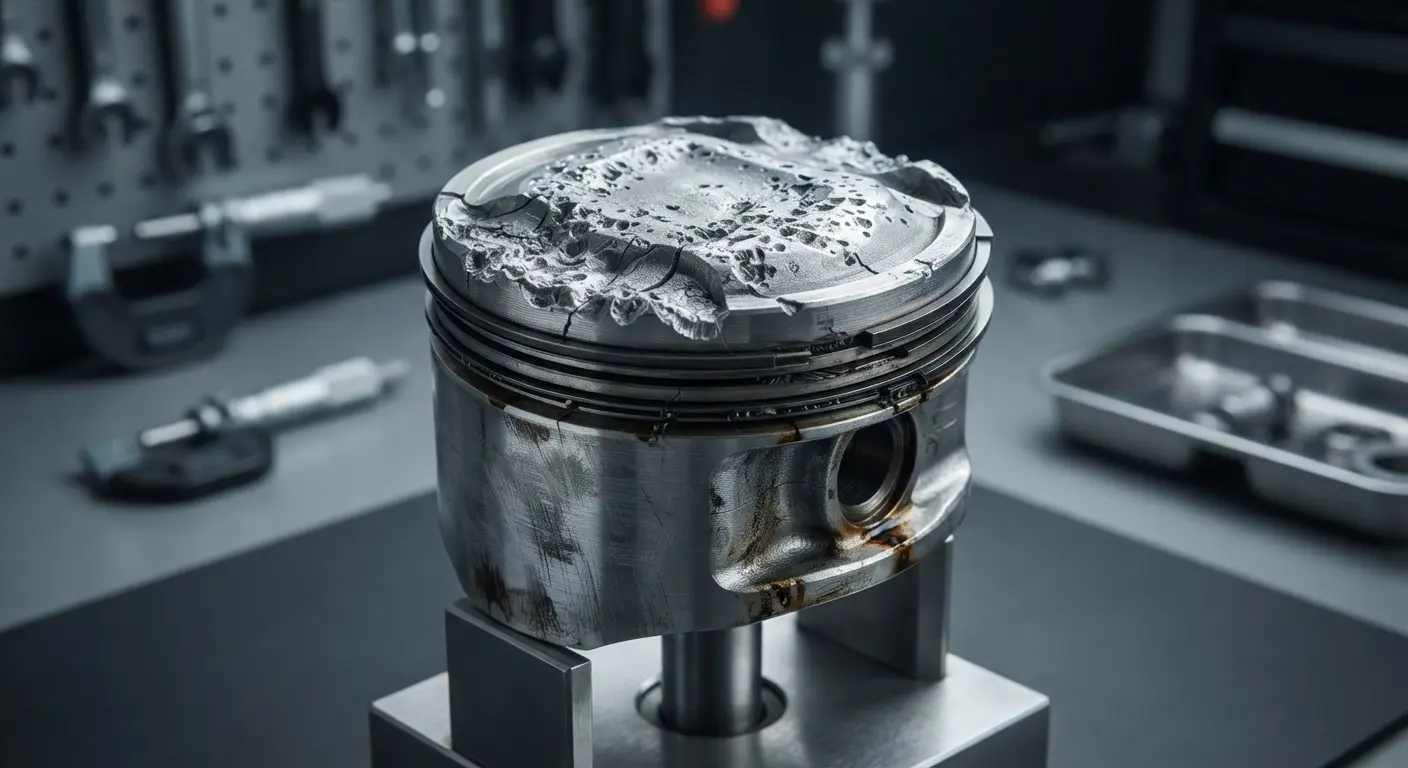
Few sounds cause more immediate anxiety for a plant operator than heavy engine knock. In continuous-duty industrial gas generators, controlled combustion is everything. The fuel-air mixture must burn in a smooth, progressive wave front initiated by the spark plug. When that process breaks down and the mixture detonates violently instead, the resulting pressure spikes can destroy an engine from the inside out in a matter of minutes.
At Mega Solutions UAE, we supply replacement top-end components like cylinder heads and pistons to plants worldwide. Understanding why detonation occurs is your first line of defense against catastrophic failure.
1. The Difference Between Pre-Ignition and Detonation
While terms are often used interchangeably, they represent two distinct destructive phenomena:
- Detonation (Engine Knock): This occurs after the spark plug fires. The unburnt end-gas mixture reaches critical pressure and temperature thresholds and explodes spontaneously, creating a shockwave that produces a sharp metallic “ping” or knock.
- Pre-Ignition: This occurs before the spark plug fires, ignited prematurely by hot spots inside the combustion chamber (such as carbon deposits or glowing valve edges).
2. Primary Causes in Industrial Gas Generators
Gas engines operating on natural gas or alternative fuels are particularly sensitive to operational changes. Common triggers include:
- Low Methane Number Fuel: Fuel gas composition fluctuations that lower the methane number make the gas far more prone to uncontrolled auto-ignition.
- Advanced Ignition Timing: If the spark timing is set too early, cylinder pressures peak before the piston reaches top dead center, fighting the upward stroke.
- Excessive Combustion Temperatures: Overheated intake air or inadequate cooling reduces the density of the charge and encourages detonation loops.
3. Preventing Long-Term Metallurgical Damage
Ignoring chronic engine knock leads to severe pitting on piston crowns, cracked valve seats, and blown head gaskets. Mitigating the risk requires continuous monitoring of fuel gas quality, regular inspection of spark plugs and ignition systems, and strict adherence to ECU timing maps.
When detonation does cause internal component failure, having rapid access to replacement pistons, valves, and overhaul kits ensures your plant gets back online safely.
Note: Mega Solutions UAE is an independent trader. We are not an authorized distributor of, or affiliated with, the INNIO Jenbacher brand. All trademarks are the property of their respective owners.