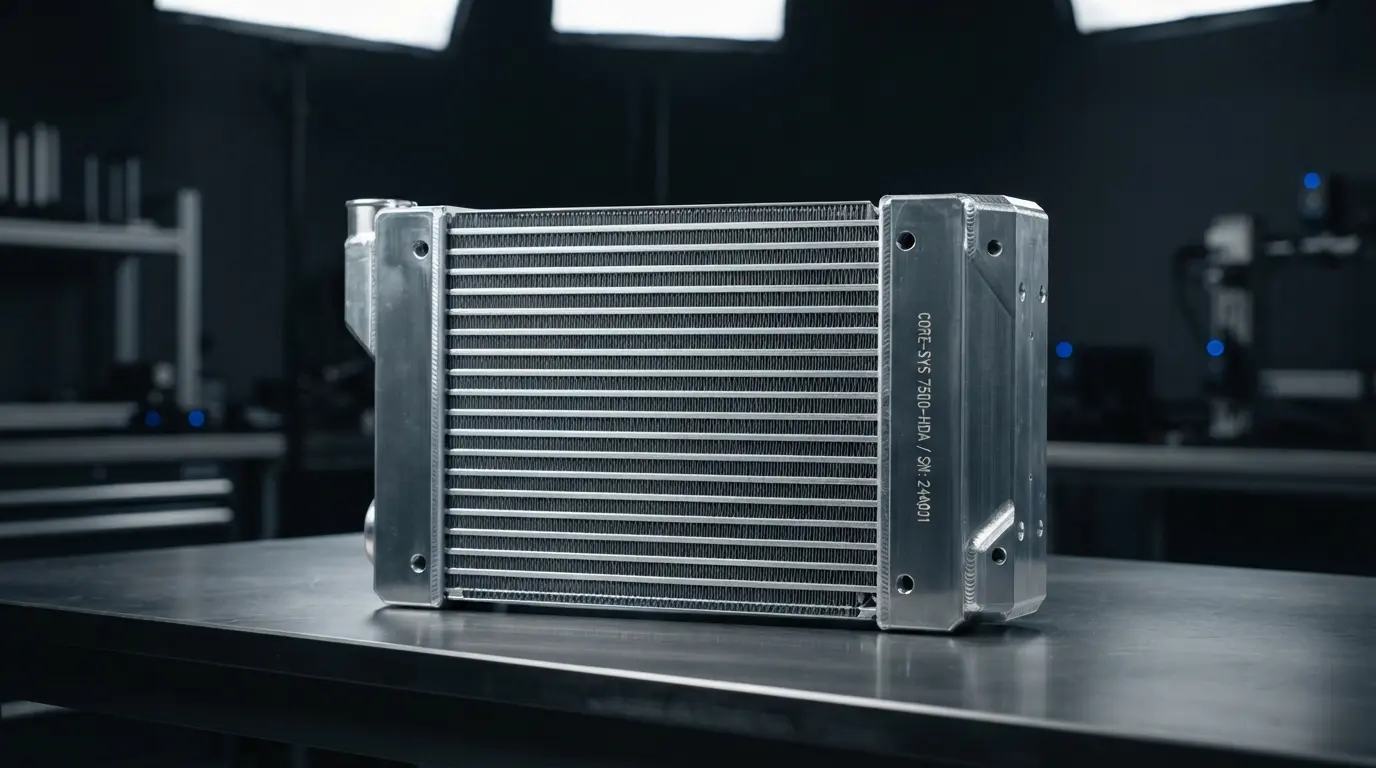
As your turbocharger compresses ambient air to force it into the engine cylinders, physics takes over: compressed air heats up significantly. Hot air is less dense, containing fewer oxygen molecules per volume—which translates directly to lower combustion efficiency and higher thermal stress.
This is where the intercooler (charge air cooler) comes in, scrubbing heat from the pressurized air stream before it enters the intake manifold.
The Hidden Hazards of Fouled Intercoolers
- External Oil/Dust Coating: Crankcase blow-by vapors coating the internal fin matrix trap airborne dust, creating an insulating blanket that cripples heat transfer.
- Internal Water-Side Scaling: If raw cooling water tubes scale up, heat rejection drops, driving up intake manifold temperatures and inviting destructive engine knocking.
Best Practices for Air Cooler Care
- Scheduled Ultrasonic Cleaning: Submerge and flush intercooler cores in specialized cleaning vats during overhaul intervals to strip away oil varnish and particulate buildup without damaging delicate aluminum or copper fins.
- Pressure Decay Testing: Periodically pressure-test the intercooler core to verify there are no internal pinhole leaks allowing cooling water to be sucked straight into the engine cylinders.
Equip Your Plant for Maximum Efficiency
We supply high-durability replacement intercooler cores, gaskets, and maintenance chemicals. Contact our technical desk via WhatsApp to verify parts compatibility for your generator setup.