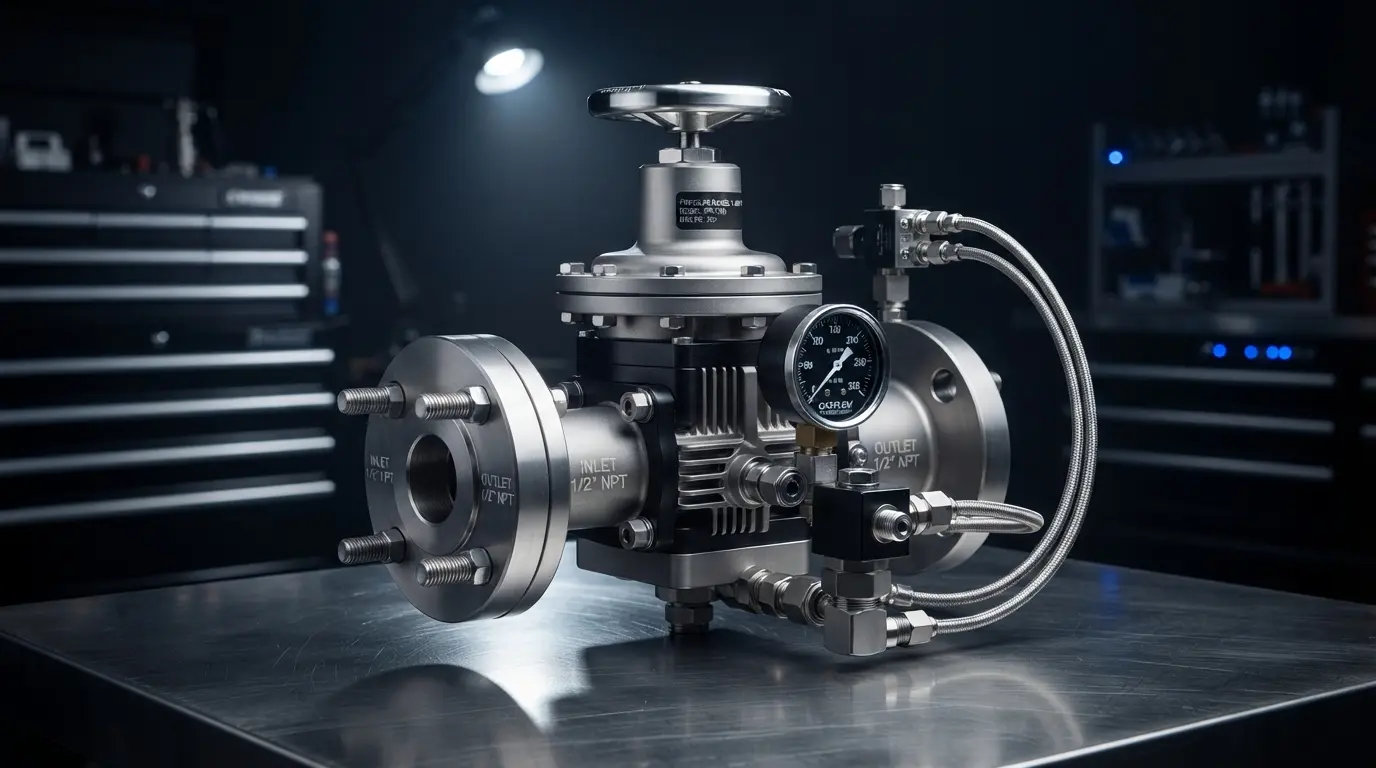
Before gaseous fuel ever reaches your engine’s dosing valves or carburetors, it must pass through a network of primary and secondary fuel pressure regulators. Pipeline supply pressures fluctuate wildly based on municipal or field demand; your plant’s regulators must step down and hold that pressure rock-steady, regardless of how fast your engine’s fuel demand swings.
When a regulator diaphragm stiffens or internal valve seats become contaminated with pipeline debris, fuel pressure surges or sags, throwing your air-fuel ratio control loop into total chaos.
Identifying Regulator Degradation
- Unstable Manifold Pressure: Fluctuating gas rail pressure readings on your control panel during steady-state electrical load are a classic symptom of a sluggish regulator diaphragm.
- Internal Leakage: A ruptured internal balancing diaphragm can vent fuel into undesirable areas or cause secondary pressure creep during engine shutdown periods.
Maintenance and Sourcing Best Practices
- Install Clean Upstream Filtration: Always protect sensitive pressure regulator valve seats by installing high-grade particulate and moisture filters upstream.
- Keep Service Rebuild Kits on Hand: Rubber diaphragms and O-rings naturally degrade over time. Having OEM-spec regulator overhaul kits in your warehouse prevents extended downtime.
Secure Precision Control Spares
Maintain absolute control over your fuel train economics. We supply robust gas pressure regulators and internal rebuild kits designed for heavy industrial applications. Connect with us on WhatsApp for fast international dispatch.