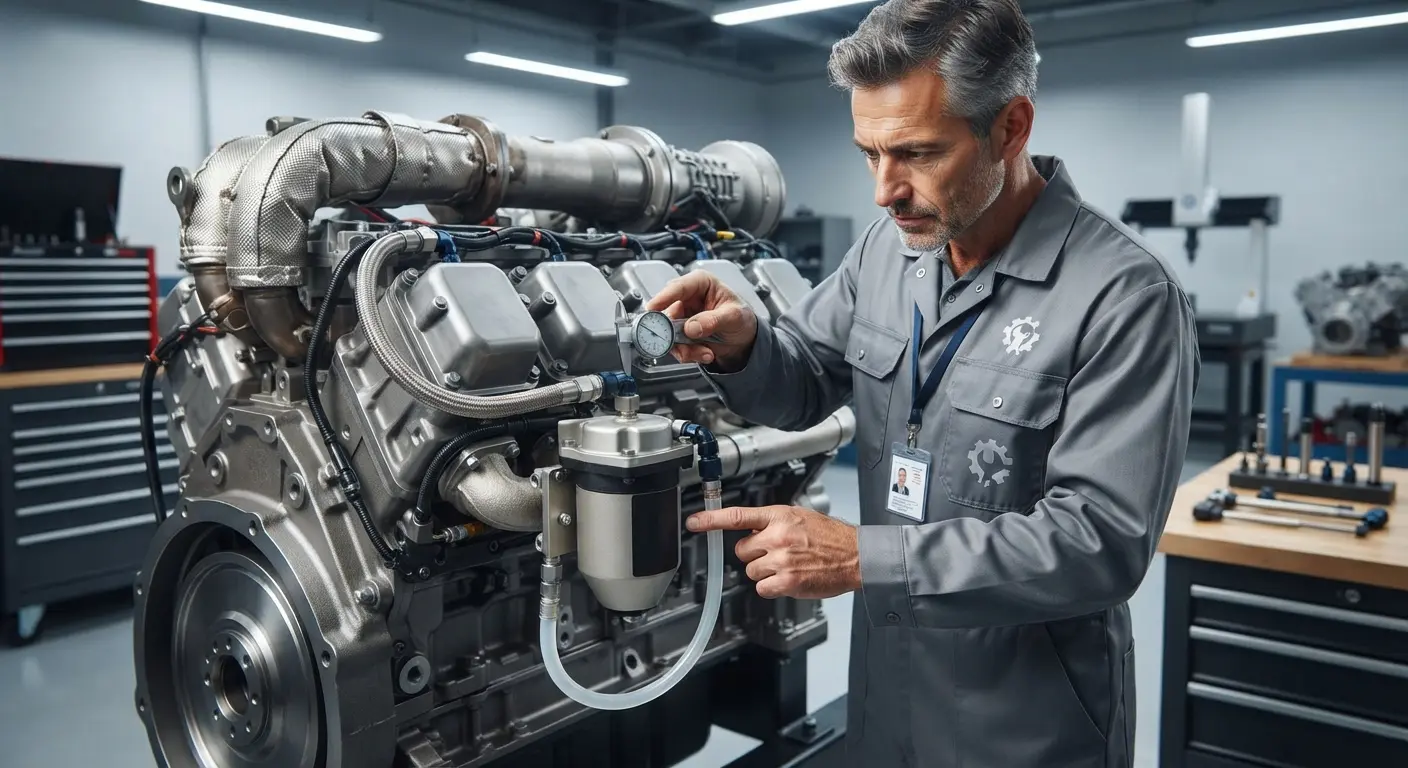
When maintaining heavy-duty industrial gas engines, attention naturally focuses on combustion chambers, turbochargers, and cooling loops. However, the crankcase ventilation system plays an equally vital role in preserving engine health. Without proper ventilation and pressure regulation, blow-by gases can rapidly degrade lubricating oil and stress engine seals.
At Mega Solutions UAE, we emphasize comprehensive preventive maintenance. Understanding how crankcase ventilation systems operate helps facility managers protect their engines from internal pressure failures.
1. Managing Blow-By Gases and Pressure
During combustion, high-pressure gases inevitably slip past piston rings into the crankcase.
- Preventing Seal Blowouts: If crankcase vapors cannot escape freely, internal pressure builds up, forcing oil past crankshaft seals, valve covers, and gasket joints.
- Controlling Oil Mist Emissions: Modern closed crankcase ventilation (CCV) systems utilize high-efficiency oil mist separators to filter out droplets before routing clean vapors back into the air intake.
2. Best Practices for Maintenance
- Filter Element Replacements: Regularly inspect and replace CCV filter elements according to operating-hour schedules to prevent internal saturation and pressure spikes.
- Breather Line Inspections: Ensure drain lines and check valves remain free of sludge and debris to maintain smooth pressure equalization across the engine block.
Note: Mega Solutions UAE is an independent trader. We are not an authorized distributor of, or affiliated with, the INNIO Jenbacher brand. All trademarks are the property of their respective owners.