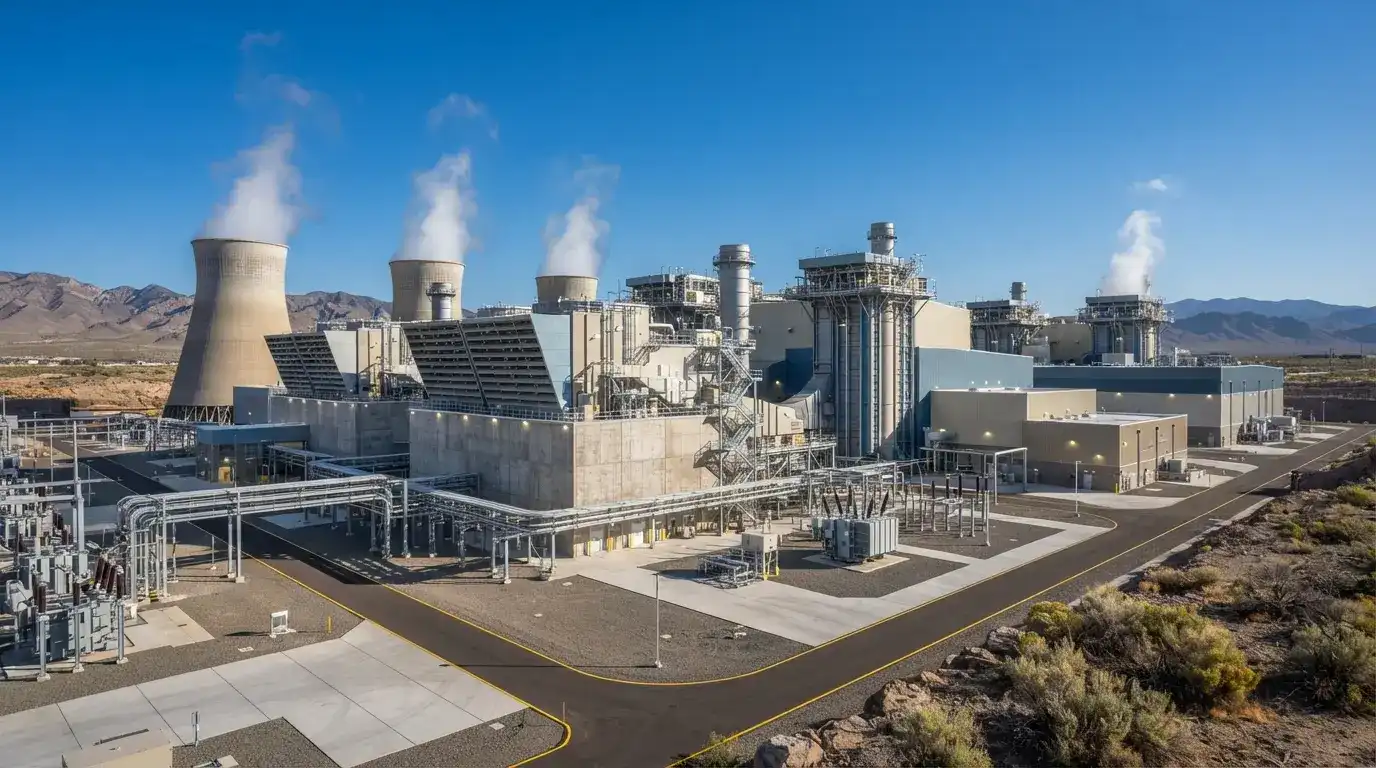
Industrial gas generators are rated under standardized International Organization for Standardization (ISO) laboratory conditions, typically at sea level with moderate ambient temperatures. However, operating heavy machinery in real-world environments—such as high-heat desert regions or humid coastal zones—introduces significant operational variables.
At Mega Solutions UAE, located at the heart of industrial activity in the Middle East, we frequently advise operators on managing environmental constraints. Understanding atmospheric derating is vital for maintaining plant efficiency.
1. How Heat and Humidity Affect Air Density
Combustion engines rely on dense air to mix efficiently with fuel gases.
- Temperature Derating: As ambient air temperature rises, air expands and density drops. Less oxygen per cylinder volume translates directly to lower maximum power output.
- Humidity Effects: High atmospheric moisture displaces oxygen molecules in the intake charge, further reducing volumetric efficiency and requiring precise air-fuel ratio adjustments.
2. Strategies for Environmental Optimization
- Enhanced Air Filtration and Intercooling: Ensure turbocharger intercoolers and air intake filtration systems are meticulously maintained to maximize thermal exchange efficiency.
- Adjusting Plant Load Profiles: Account for seasonal ambient peaks during plant scheduling to prevent thermal overloads.
Note: Mega Solutions UAE is an independent trader. We are not an authorized distributor of, or affiliated with, the INNIO Jenbacher brand. All trademarks are the property of their respective owners.s