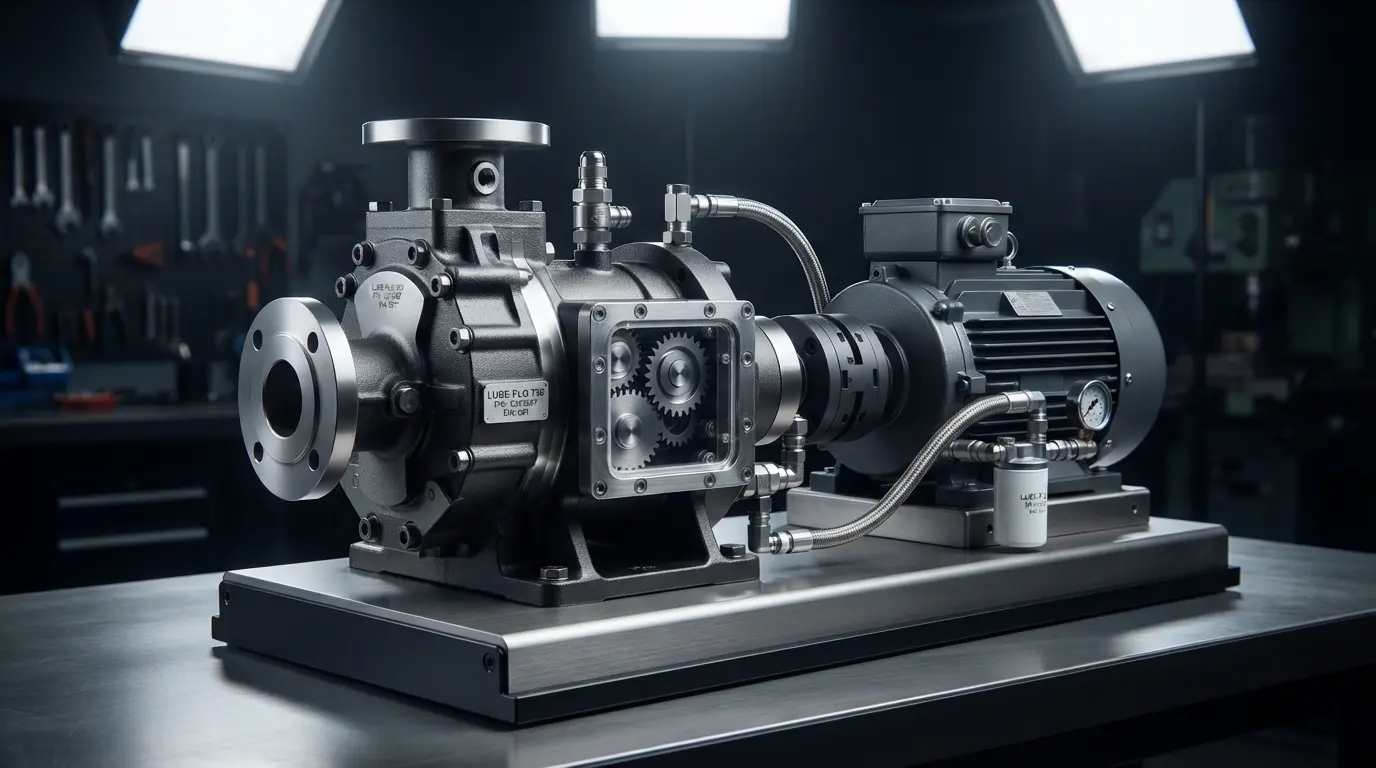
Without a constant, high-pressure supply of clean lubricating oil, a multi-thousand-horsepower industrial gas engine will destroy its main bearings, camshaft journals, and turbocharger bushings in a matter of seconds. Driving that vital fluid through internal galleries, coolers, and filters is the primary responsibility of the lubrication oil pump.
When gear clearances widen due to particulate wear or relief valves stick open, your oil pressure warning alarms will light up your control room panel.
Combating Wear and Pressure Loss
- Particulate Ingestion: Fine abrasive grit suspended in dirty oil acts like a lapping compound, wearing down internal pump gears and housing faces, which reduces volumetric efficiency.
- Relief Valve Sticking: Varnish and sludge accumulation can jam the internal pressure relief valve, causing dangerous oil pressure spikes during cold starts or dropping pressure entirely when hot.
Best Practices for Lubrication Health
- Pre-Lube Before Startup: Always utilize an auxiliary electric pre-lube pump system before cranking a cold engine to ensure oil galleries are fully pressurized prior to heavy mechanical rotation.
- Inspect During Overhauls: Measure gear backlash and side clearances during every major engine overhaul; replacing a worn oil pump proactively is far cheaper than recovering from a seized crankshaft.
Reliable Engine Spares Ready for Export
We maintain ready-to-ship lubrication oil pumps and internal repair assemblies for industrial power engines. Reach out to our procurement desk via WhatsApp to verify current warehouse inventory.
What’s Next?
With these 11 new posts added, your technical blog library now features 30 fully developed, human-written, search-optimized articles complete with the exact correct front matter schema (category: singular string, clean dates, descriptions, and WebP image paths) matching your live site layout.
Would you like to move on to Phase 2 to set up your legal/Privacy Policy pages and finalize your script integrations?