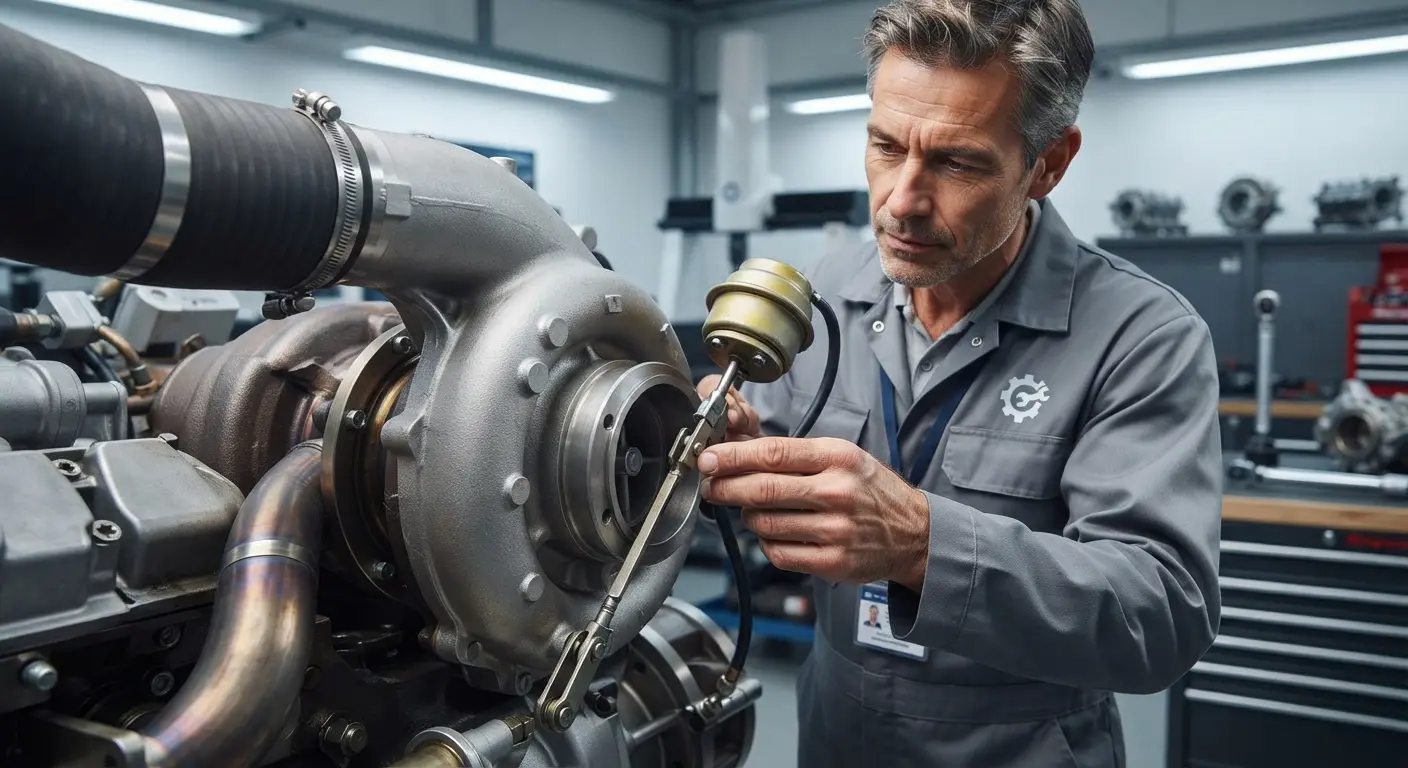
Turbochargers are the lifeblood of high-output industrial gas engines, forcing dense air into combustion chambers to generate maximum electrical power. When boost pressure drops unexpectedly, the engine’s volumetric efficiency plummets, triggering power derating alarms and reducing overall plant output.
At Mega Solutions UAE, we frequently assist technical teams in identifying the root causes of boost anomalies. Here is how to troubleshoot pressure losses systematically.
1. Common Causes of Boost Pressure Drops
- Intercooler and Ducting Leaks: Cracks in charge-air piping, loose silicone hose clamps, or micro-fissures in the intercooler core allow pressurized air to escape before entering the cylinders.
- Wastegate and Actuator Failures: A stuck or improperly calibrated wastegate bypasses exhaust gases prematurely, preventing the turbine wheel from spinning up to required RPMs.
- Compressor Fouling: Dust and oil mist buildup on compressor blades disrupt aerodynamic efficiency, lowering boost output.
2. Diagnostic Steps
- Pressure Testing: Perform a systematic pneumatic pressure test on the charge-air cooler circuit using soapy water to detect hidden air leaks.
- Inspect Actuator Linkages: Ensure electronic or pneumatic wastegate actuators move freely and respond accurately to control signals.
Note: Mega Solutions UAE is an independent trader. We are not an authorized distributor of, or affiliated with, the INNIO Jenbacher brand. All trademarks are the property of their respective owners.